It’s a quarter past ten and a great horned owl is softly hooting outside my bedroom window. Hoo hoo hoo hoo. Pause. Hoo hoo hoo hoo. Is it an omen of bad luck or a talisman for good fortune? A shape-shifter? Protector for my army as I prepare to enter battle? Perhaps it’s just a fluffy bird that likes to eat mice and sing sad songs at night. Hoo hoo hoo hoo. Pause. Hoo hoo hoo hoo.
Great horned owls are one of twelve species of owl that call Minnesota home, and they’re common throughout the state. Famous for their silent flight, great eyesight, and uncanny ability to turn their heads 270 degrees, a great horned owl can also eat more than 4,000 mice per year, a statistic that makes them a great addition for any backyard. Great horned owls will take over abandoned squirrel, crow, and hawk nests and are well-adapted to living with people. In fact, wildlife biologists believe that they may be more common now than they were in pre-colonial times.
Another family of animals that is making a comeback in Minnesota are the mustelids. These slender and adorable (though entirely ferocious) animals include weasels, minks, martens, fishers, otters, badgers, and wolverines. Minks and otters are water-loving mammals, while martens and fishers are forest dwellers. Badgers prefer prairies and open areas, and weasels are found throughout the state. The last known wolverine in Minnesota was seen in Itasca County in 1899, but biologists believe that they once lived here in the most remote reaches of the northern forests.
Unfortunately, martens, fishers and otters were hard-hit by trapping and lost most of their woodland habitat during the 1800s logging era. By the early 1900s, martens and fishers were nearly extinct and otters had disappeared from southern Minnesota. Now, however, all three animals have rebounded and are expanding their territories.
In the example of martens and fishers, populations have climbed as second growth forests continue to grow and mature in New England and the Upper Midwest. More protective rules for hunting and trapping have helped as well. This year, I’ve heard reports of fishers in Afton, Stillwater and Scandia, and the Minnesota DNR notes that fisher sightings are up in southeastern Minnesota as well. A few states further east of here, a fisher was found in northeastern Ohio this spring for the first time in nearly 200 years.
In southwestern Minnesota, Minnesota DNR Biologist Carrol Henderson led a successful effort to reintroduce river otters to the Minnesota River Valley between Big Stone National Wildlife Refuge and Lac qui Parle Wildlife Refuge in 1980-82. In subsequent years, otters have also found their way back to southeastern Minnesota, using the Mississippi River as a habitat corridor.
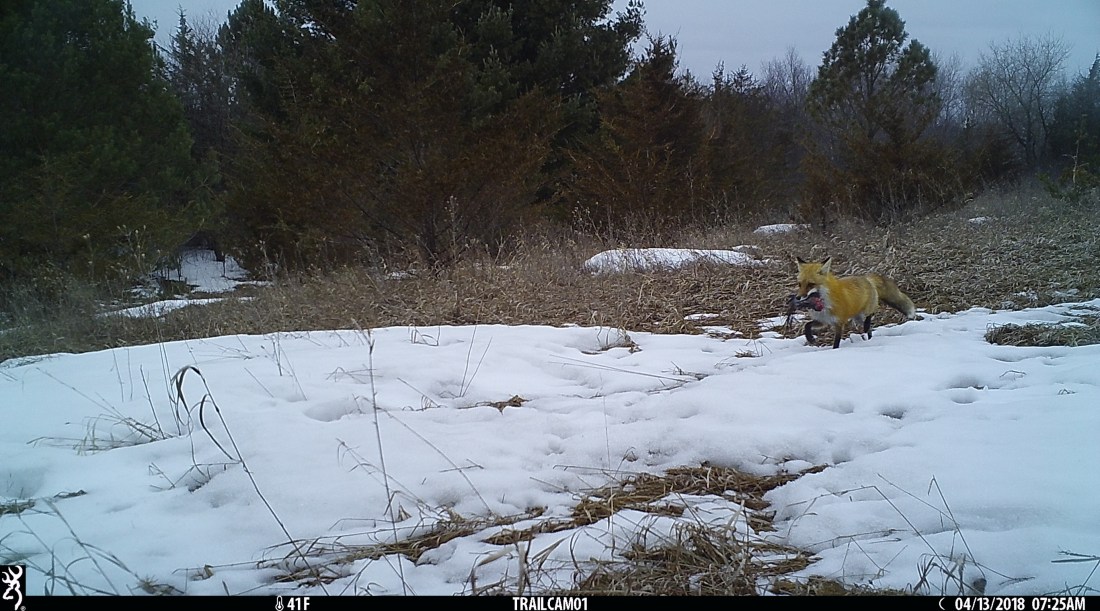
One last animal enjoying a renaissance in our modern-day era is the red fox, which lives throughout Minnesota, including in the Twin Cities area. Though foxes will usually avoid people, I’ve recently seen one in my front yard and another in my Stillwater neighborhood. Unlike their larger canine relatives, foxes only weigh 8-15 pounds and are not dangerous to humans. They eat rats and mice, rabbits, ground squirrels, birds, snakes, fish, insects, berries nuts, and seeds. As a redhead, I feel a natural affinity for foxes and am always excited to see them.
Be not afraid if you hear an owl hoot gently in the night or see a bushy-tailed fox in the woods. Instead, celebrate the fact that nature is resilient and that forests and wildlife return.

 East Metro Water